
Money Quest
Grow a habit, not a high score.
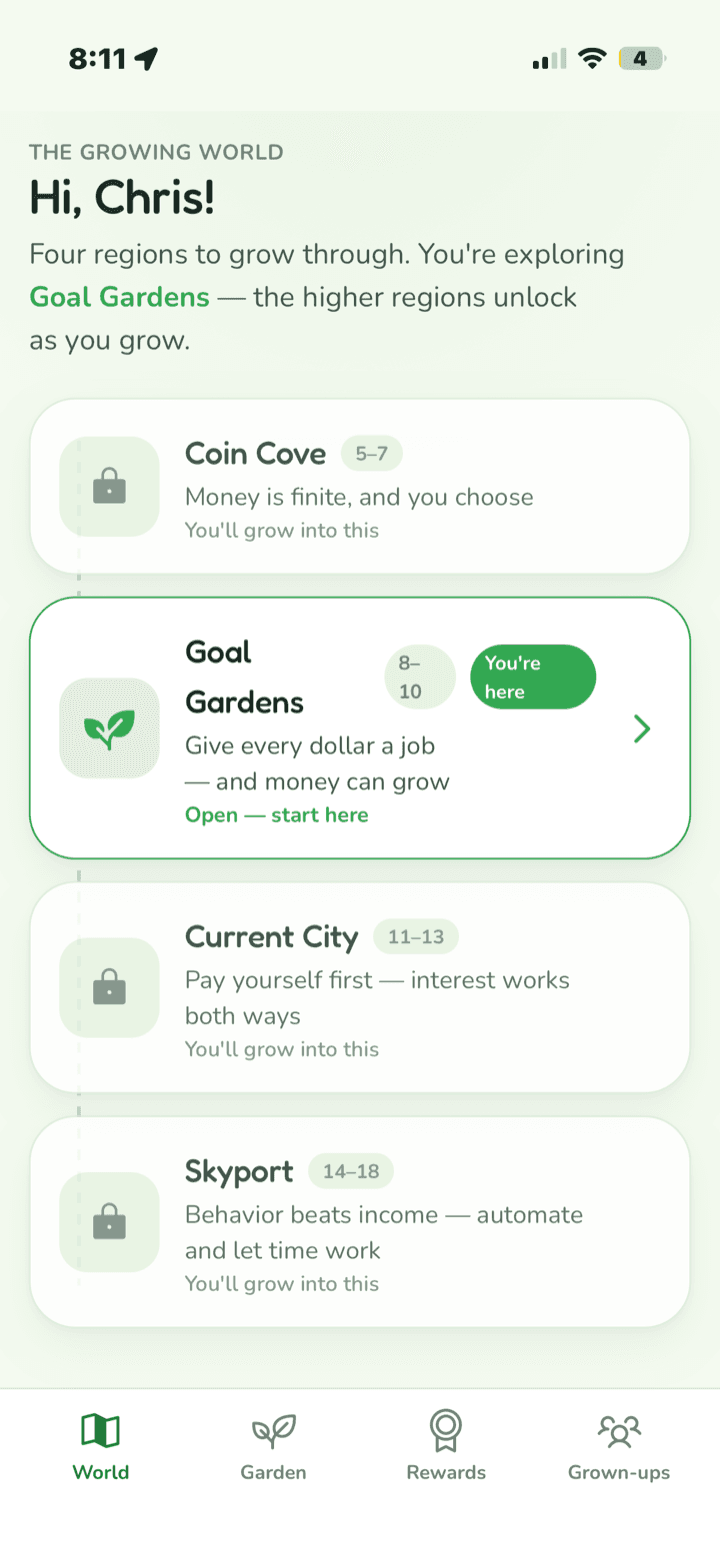
What it is
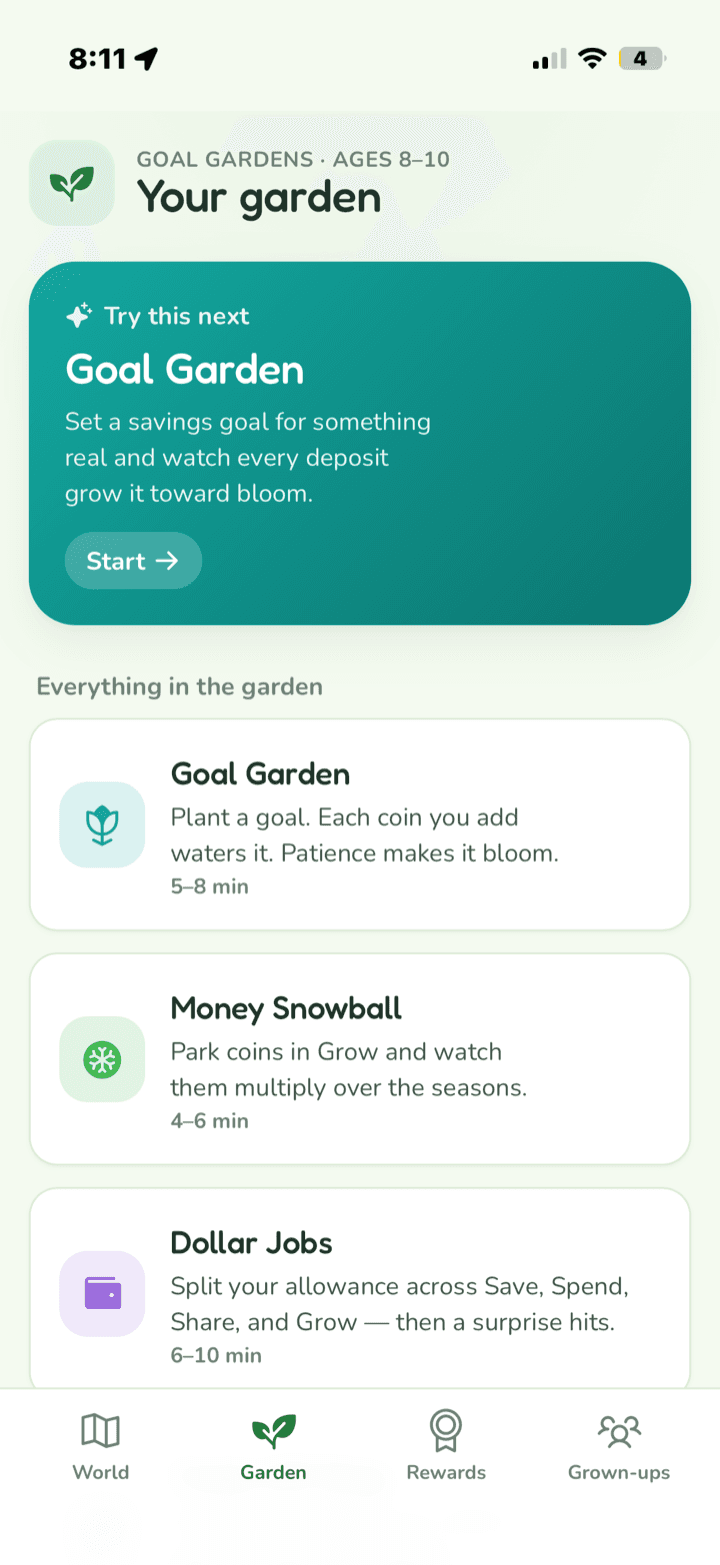
Money Quest turns saving into an adventure. Kids move through a bright, growing world where small, steady choices — setting aside a coin, skipping an impulse buy, giving some away — add up over time. Instead of chasing a high score, they build a habit: they watch savings grow, discover how money can multiply through compound interest, and work their way up to earning their first paycheck. It's the money sense most of us wish we'd learned young, made playful and age-appropriate.
A look inside

What it builds
- Delayed gratification and impulse control
- Saving, budgeting, and goal-setting
- Understanding earning, work, and value
- Early numeracy with real-money concepts
- Long-term thinking — how savings grow over time
- Generosity and giving as a habit
The research behind it
Money habits form surprisingly early in childhood, and the underlying skill — being able to wait and plan for a bigger reward — predicts better outcomes well into adulthood. Repeated, hands-on practice is what makes it stick.
Children's core money habits are largely formed by around age seven, so early, repeated practice matters.
Source: Whitebread & Bingham (2013), 'Habit Formation and Learning in Young Children,' University of Cambridge / Money Advice Service
The ability to delay gratification in early childhood predicts a range of better outcomes years later.
Source: Mischel, Shoda & Rodriguez (1989), 'Delay of Gratification in Children,' Science
Hands-on, experiential money activities build financial capability more effectively than lectures alone.
Source: TODO(Chris): add preferred citation (e.g., CFPB youth financial-education research)
Faith & formation
Money is really a question about the heart — gratitude, generosity, contentment, and faithfulness with what we're given. Money Quest's 'little by little' rhythm is a natural picture of stewardship: handling small things well, holding money with open hands, and learning to give cheerfully.
“Wealth gained hastily will dwindle, but whoever gathers little by little will increase it.”
“One who is faithful in a very little is also faithful in much.”
Scripture quotations are from the ESV.
Tips for parents
- Pair it with a small real allowance so the habit transfers to real life.
- Make “save, spend, give” a family rhythm — let your child choose where the giving goes.
- Think out loud about your own money choices; kids learn most by watching you.
- Celebrate reaching a savings goal more than the size of the balance.
Ready to try Money Quest?
Add it to your home screen in seconds — free, ad-free, and offline-ready.